Equipping the People Who Show Up First
We train community health workers, peer educators, and frontline providers to deliver accurate, compassionate reproductive health support where it’s needed most.
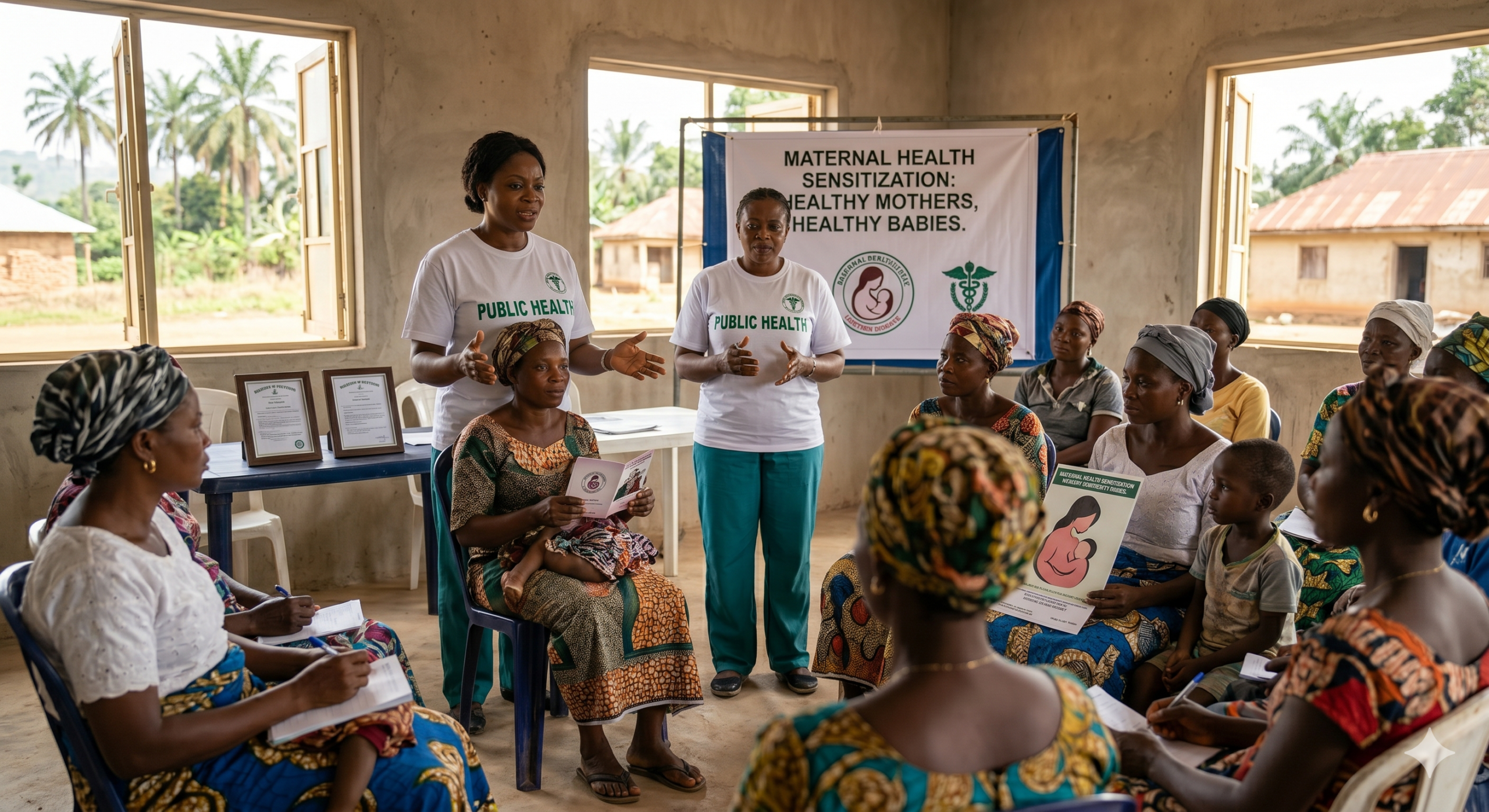
In many underserved Nigerian communities, the first person someone turns to about a reproductive health concern isn’t a doctor. It’s a community health worker, a peer educator, a religious leader, or another trusted community figure. Our Training & Capacity Building Program equips these frontline voices with accurate, up-to-date knowledge and practical skills so they can deliver reliable reproductive health support and referrals within their own communities, multiplying our reach far beyond what our team could achieve alone.
Misinformation spreads fastest through trusted community channels, which means those same channels can also be the fastest way to spread accurate information, if the people delivering it are properly equipped. Many community health workers and volunteers are motivated and trusted, but have never received formal training on fertility awareness, maternal health, cervical cancer prevention, or disability-inclusive care. Investing in their capacity means every training we deliver multiplies into dozens, sometimes hundreds, of better-informed community conversations.
Community health workers and volunteers, peer educators and youth leaders, clinic and hospital staff, religious and traditional community leaders, and partner NGOs seeking training support for their own teams.
Bring reproductive health training to your team or community.
We cover the complete biological picture of how fertility works. You'll learn:
The goal? You'll understand your body well enough to make informed decisions and recognize when professional help is needed.
No, there's an important difference. Natural family planning is about preventing pregnancy by tracking cycles. Fertility awareness education is about understanding your reproductive health so you can optimize your chances of conception or understand barriers to it.
We teach you the science, not a method. Whether you use that knowledge to prevent or achieve pregnancy is your choice.
First consultation: Typically 60 minutes. We go deep your medical history, current situation, concerns, goals.
Follow-up sessions: 30-45 minutes, depending on what you need.
If you want to attend a group workshop instead of one-on-one, those are usually 2-3 hours and cover foundational knowledge for multiple couples at once.
Absolutely, and we encourage it. Many couples have different understandings of how fertility works. When you both learn together, you're on the same page and can make decisions as a team.
If your partner can't attend, we're happy to work with you alone. But couples who come together tend to have better outcomes because they're making informed decisions together.
That's exactly what we prepare you for. At the end of your education session, we'll:
Education is step one. If you need step two, we'll guide you there.
Need Help?
09131448145
A CAC-registered Nigerian nonprofit (CAC/IT 155823) improving reproductive health, fertility awareness, and maternal wellbeing for families across Nigeria.
Copyright © 2026 DMariano Profertility Foundation. All Rights Reserved. Designed by Hilarium Digital