Meeting People Where They Are
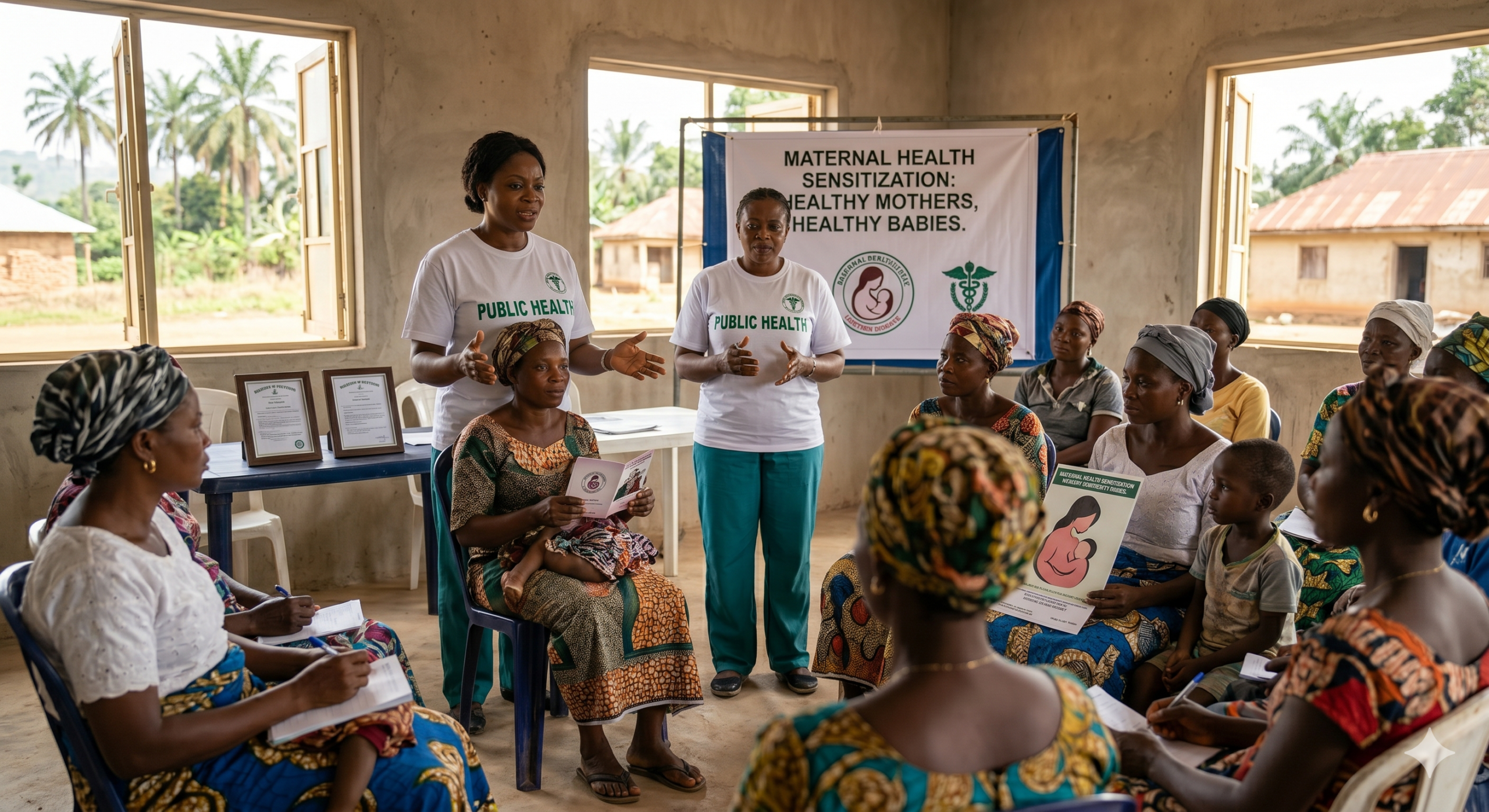
Mobile clinics, outreach camps, and grassroots campaigns that bring reproductive and fertility health support directly to underserved communities.
For many families in rural and underserved parts of Nigeria, the nearest reproductive health service is hours away, if it exists at all. Our Community Health Outreach Program closes that distance. Through mobile outreach camps, awareness campaigns, and partnerships with local leaders, we bring education, screening, and referral services directly into communities that would otherwise be left out of the conversation entirely.
Distance, cost, and lack of awareness keep too many people from ever accessing basic reproductive health services, not because the services don’t exist, but because they aren’t within reach. Outreach is often the only way many people, especially in rural, low-income, or otherwise underserved areas, will ever encounter accurate reproductive health information or a screening opportunity. Meeting people in their own communities also builds a level of trust that a clinic visit alone often cannot.
Rural and underserved communities, market women and informal workers, students and young people, community and religious leaders, and anyone without easy access to a health facility.
Bring our team to your community.
We cover the complete biological picture of how fertility works. You'll learn:
The goal? You'll understand your body well enough to make informed decisions and recognize when professional help is needed.
No, there's an important difference. Natural family planning is about preventing pregnancy by tracking cycles. Fertility awareness education is about understanding your reproductive health so you can optimize your chances of conception or understand barriers to it.
We teach you the science, not a method. Whether you use that knowledge to prevent or achieve pregnancy is your choice.
First consultation: Typically 60 minutes. We go deep your medical history, current situation, concerns, goals.
Follow-up sessions: 30-45 minutes, depending on what you need.
If you want to attend a group workshop instead of one-on-one, those are usually 2-3 hours and cover foundational knowledge for multiple couples at once.
Absolutely, and we encourage it. Many couples have different understandings of how fertility works. When you both learn together, you're on the same page and can make decisions as a team.
If your partner can't attend, we're happy to work with you alone. But couples who come together tend to have better outcomes because they're making informed decisions together.
That's exactly what we prepare you for. At the end of your education session, we'll:
Education is step one. If you need step two, we'll guide you there.
Need Help?
09131448145
A CAC-registered Nigerian nonprofit (CAC/IT 155823) improving reproductive health, fertility awareness, and maternal wellbeing for families across Nigeria.
Copyright © 2026 DMariano Profertility Foundation. All Rights Reserved. Designed by Hilarium Digital